
APPSC Executive Officer 2026: 104 Posts, Ends 5 Nov
APPSC Executive Officer Grade-III notification 2026: 104 Endowments posts, apply 16 Oct to 5 Nov. Eligibility, pay, exam pattern, syllabus and how to apply.
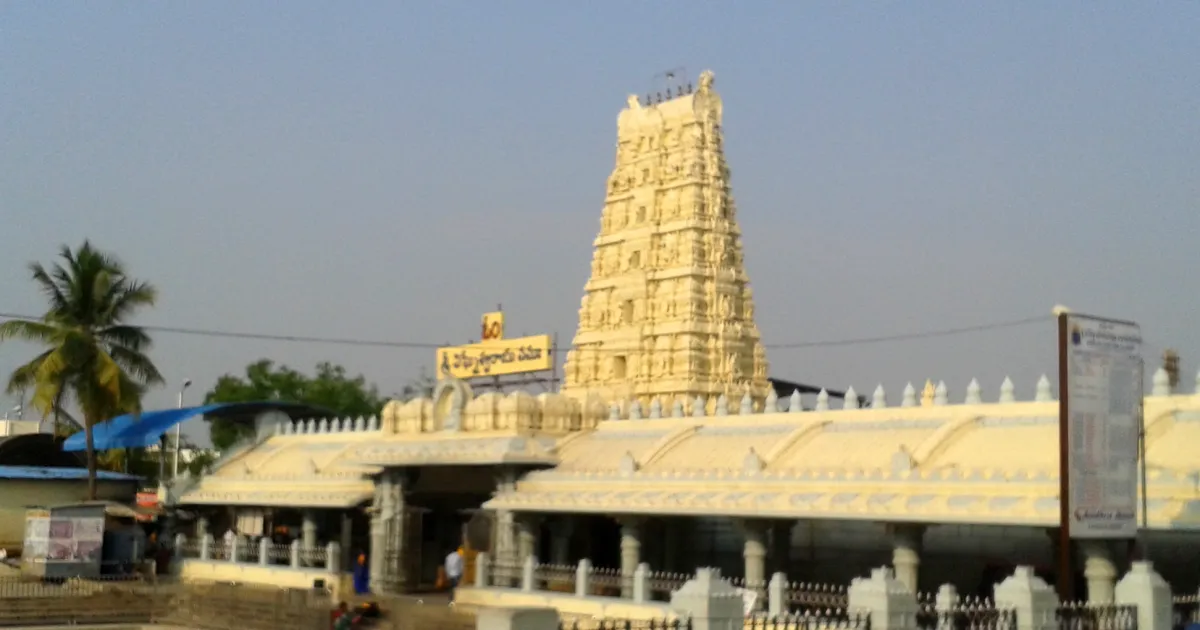
APPSC Executive Officer notification 2026 is out for 104 Grade-III posts in the AP Endowments Department. Online applications open on 16 October and close on 5 November 2026 (11:59 pm). Any graduate can apply, but you must profess the Hindu religion, because the job is managing temples.
Update (17 October 2026): APPSC has published the detailed Notification No. 23/2026, dated 16 October. The age limit is 18 to 44 years (2 years more than last time), the fee is ₹250 + ₹80, and the 104 posts are spread over 21 districts (table below). One new point to note: BC-C and BC-E candidates are not eligible for this post.
| Detail | Information |
|---|---|
| Recruiting body | Andhra Pradesh Public Service Commission (APPSC), Vijayawada |
| Post | Executive Officer Grade-III, A.P. Endowments Subordinate Service |
| Notification | No. 23/2026, detailed notification dated 16 October 2026 |
| Vacancies | 104 (district-wise) |
| Pay scale | ₹25,220 to ₹80,910 |
| Apply online | 16 October to 5 November 2026, up to 11:59 pm |
| Qualification | Any bachelor’s degree, and you must profess the Hindu religion |
| Not eligible | BC-C and BC-E candidates |
| Age limit | 18 to 44 years as on 1 July 2026 |
| Fee | ₹250 processing + ₹80 exam fee (exemptions below) |
| Corrections | 7 days after 5 November, ₹100 per correction |
| Selection | One computer-based exam (300 marks), then a qualifying Computer Proficiency Test |
| Screening test | None, whatever the number of applicants |
| Exam date | Not announced yet |
| Official website | psc.ap.gov.in |
Why 104 posts matters
The last time APPSC advertised this post, in August 2025 (Notification No. 10/2025), there were only 7 carried-forward vacancies, spread over a few districts. This time there are 104.
That’s the same story as the APPSC ASO notification this month, which went from 5 posts to 196. After years of tiny or no intake, the backlog is being cleared, so the post count is far higher than usual.
District-wise vacancies
These are district posts, so you compete for the district where you’re a local candidate, plus the few “open” posts. This is the official break-up from Annexure-I of the detailed notification:
| District | Posts | District | Posts |
|---|---|---|---|
| Srikakulam | 2 | Palnadu | 12 |
| Parvathipuram Manyam | 1 | Bapatla | 7 |
| Anakapalli | 2 | Prakasam | 7 |
| Kakinada | 3 | SPSR Nellore | 3 |
| Dr. B.R. Ambedkar Konaseema | 4 | Tirupati | 3 |
| East Godavari | 4 | Annamayya | 2 |
| West Godavari | 10 | YSR Kadapa | 7 |
| Eluru | 4 | Kurnool | 1 |
| Krishna | 6 | Nandyala | 6 |
| NTR | 9 | Ananthapuramu | 7 |
| Guntur | 4 | Total | 104 |
Districts not in the list (such as Visakhapatnam, Chittoor and Sri Sathya Sai) have no EO post this time.
By category (all districts): OC 53, BC-A 13, BC-B 5, BC-D 1, SC Group-I 10, SC Group-II 9, SC Group-III 1, ST 6, EWS 6. Of the OC posts, 10 are for women (West Godavari, NTR, Guntur, Palnadu ×2, Bapatla, Prakasam ×2, Nandyala, Ananthapuramu), and there’s 1 post for a visually impaired candidate in Nandyala.
So if you’re from Palnadu, West Godavari or NTR, your odds are much better than in Kurnool, where there’s a single BC-B post.
What does an Executive Officer Grade-III do?
An EO runs the day-to-day administration of a temple or charitable institution under the AP Endowments Department. The work covers temple accounts and income, staff, festivals and rituals arrangements, and temple lands and property records. The duties are set out in Section 29 of the AP Endowments Act (Act 30 of 1987), which is also in your syllabus.
It’s a desk-and-field job, not a priest’s job. You won’t perform rituals. You’ll handle files, audits, land disputes, crowds on festival days and a lot of coordination with the local committee.
APPSC Executive Officer notification 2026: eligibility
Qualification
A bachelor’s degree in any subject from a university set up under a Central or State Act, or any institution recognised by UGC, or an equivalent qualification. No particular subject is needed.
You must have the degree as on the date of the detailed notification, 16 October 2026. APPSC says that date is the crucial date “in all aspects”, so if your final-year result isn’t out by then, you can’t apply this time.
Religion
Only candidates who profess the Hindu religion can apply. This isn’t an APPSC preference. It comes from Section 29(3) of the AP Charitable and Hindu Religious Institutions and Endowments Act, 1987 (as amended by Act 33 of 2007), and the detailed notification repeats it. If you stop professing Hinduism after joining, you lose the powers of the post.
Because of the same rule, the notification says BC-C and BC-E candidates are not eligible for this post. Check your community certificate group before you pay the fee. The fee isn’t refunded.
Age limit
18 to 44 years as on 1 July 2026. That’s 2 years more than the 2025 notification (18 to 42), in line with this year’s ASO and Group 1 notifications.
Relaxations allowed:
| Category | Relaxation |
|---|---|
| SC, ST, BC, EWS | 5 years |
| Persons with benchmark disabilities | 10 years |
| Ex-servicemen, NCC instructors | 3 years plus length of service |
| Regular AP state government employees | Length of service, up to 5 years |
| Retrenched AP Census Department temporary staff (6+ months) | 3 years |
Selection process and exam pattern
Two steps, and APPSC has said in the 2026 notice that there’s no screening test, however many people apply.
Step 1: Written exam (computer-based, degree standard)
| Paper | Subject | Questions | Time | Marks |
|---|---|---|---|---|
| Paper I | General Studies & Mental Ability | 150 | 150 minutes | 150 |
| Paper II | Hindu Philosophy & Temple System | 150 | 150 minutes | 150 |
| Total | 300 |
- Objective type, taken on a computer at an exam centre.
- Negative marking: one-third of the question’s marks is cut for each wrong answer.
- If the exam runs in more than one session, APPSC will normalise the marks.
- The minimum aggregate to be considered is 40% for OC, EWS, sportspersons and ex-servicemen, 35% for BC, and 30% for SC, ST and PBD.
- Questions are set in English and translated into Telugu. If the two differ, the English version counts.
- After the exam, APPSC puts up an initial answer key. You get 3 days to object, at ₹100 per objection, refunded if your objection is upheld.
Exam centres: Srikakulam, Vizianagaram, Visakhapatnam, East Godavari, West Godavari, Krishna, Guntur, Prakasam, SPSR Nellore, Chittoor, Anantapuramu, Kurnool and YSR Kadapa. You choose 3 preferences in the form.
Step 2: Computer Proficiency Test (qualifying)
Candidates shortlisted on written-exam merit take a 60-minute practical test in office software for 100 marks. You only need to cross the qualifying mark: 40 for OC, 35 for BC, 30 for SC, ST and PBD. It covers computer basics, Windows, internet and the usual office tools.
It doesn’t add to your rank. But if you fail it, you aren’t appointed, so don’t skip practice.
Syllabus in short
Paper I, General Studies & Mental Ability: current events (international, national and Andhra Pradesh), general science and technology, Indian history with focus on AP and the national movement, geography of India and AP, polity and governance, Indian economy and planning, sustainable development, disaster management, logical reasoning, and basic data analysis (tables, charts, mean, median, mode, variance).
This is the same Paper I that APPSC uses for its other degree-level posts. If you’re already preparing for the ASO exam or Group 2, you’re covering it anyway.
Paper II, Hindu Philosophy & Temple System. This is where the exam is won. The 12 units are:
- Ramayanam: characters, Kandaas, dynasties and places
- Mahabharatham: characters, Parvaas, dynasties and places
- Bhagavatham: characters, Skandams and places
- Hindu Puranams and the places mentioned in them
- Temple Agamas: Vaishnava (Vaikhanasam, Pancharathram, Chattada Srivaishnavam), Saiva (Smardham, Adi Saiva, Veera Saiva, Jangama, Kapalika) and Sakteyam
- Hindu festivals across India, and classical fine arts of Indian origin
- Vedic culture: Yagnas, Vedas, Upavedas, Upanishads, Dharmas of each stage of life
- Philosophies and their gurus: Alwars, Nayanars, Sankaracharya (Advaitha), Ramanujacharya (Visishtadvaitha), Madhwacharya, Basava
- Family structure in Hindu society, adoption and succession
- Sources of income for temples, and how endowment funds are allocated (Section 57 of Act 30/87)
- Duties of Executive Officers (Section 29 of Act 30/87)
- Land records, the ROR (Pattadar Pass Book) Act and Sections 75 to 86 of the Endowments Act
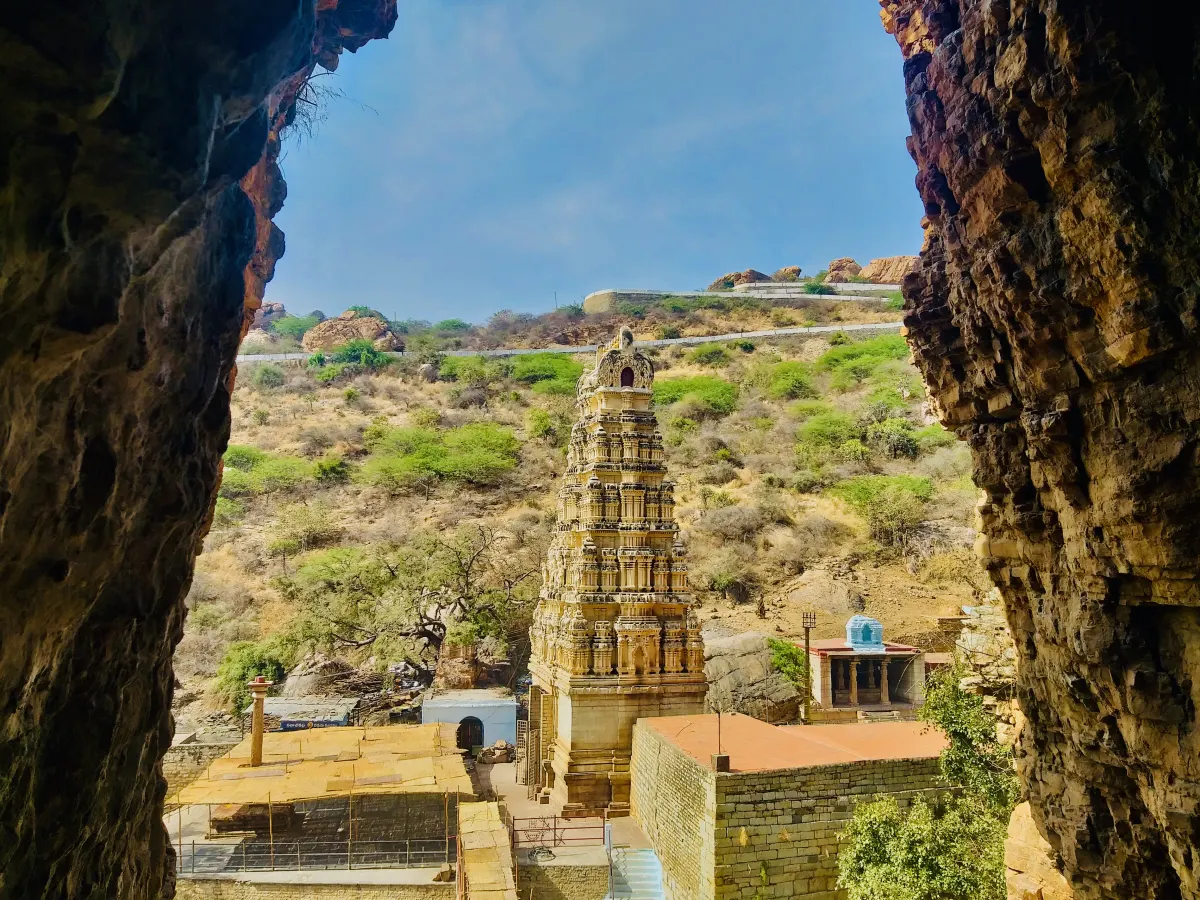 The 15th-century Yaganti Umamaheswara temple in Andhra Pradesh. Photo: P. Madhusudan / Wikimedia, CC0
How to prepare for Paper II
Most aspirants know the epics from home or TV serials. That helps with the stories, but the questions go deeper: which Kandaa an event is in, which dynasty a king belongs to, which Agama a temple follows.
- Start with units 10 to 12. The Endowments Act sections and land records are pure law. Few people bother with them, and they’re the easiest marks to secure once you read the bare Act.
- Read one good Telugu or English summary of each epic, and note the Kandaas, Parvaas and Skandams in order. Make a list of places mentioned in each.
- Make a table for unit 8: philosopher, school, period, main work. These come up as matching questions.
- For Agamas, learn which major AP temples follow which tradition. Tirumala, for example, follows Vaikhanasa Agama.
Honestly, someone who gives Paper II 6 focused weeks can beat a stronger general-studies candidate. That’s the edge in this exam.
Pay scale
The notified scale is ₹25,220 to ₹80,910. Your basic pay starts at ₹25,220, and DA, HRA and other allowances are added as per AP government rules. I’m not quoting an in-hand figure because it changes with your posting place and the DA rate at the time.
That’s a lower scale than ASO (₹37,640 start). Keep it in mind if you qualify for both.
Application fee
The fee is ₹250 processing plus ₹80 exam fee, so ₹330. These candidates pay only the ₹250 (no exam fee):
- SC, ST, BC, persons with benchmark disabilities and ex-servicemen
- Families with an AP white ration card (residents of AP)
- Unemployed youth as per G.O.Ms.No.439 (you’ll have to give a declaration later)
Candidates from other states pay the full ₹330 and get no reservation, except PBD and ex-servicemen, who keep the fee exemption. Pay online by net banking, credit card or debit card. The fee isn’t refunded for any reason.
How to apply
- Go to psc.ap.gov.in. If you’ve never applied to APPSC, do the One Time Profile Registration (OTPR) first. Registering alone isn’t an application.
- From 16 October, log in with your OTPR ID and open the application for Notification No. 23/2026.
- Check the details pulled in from your OTPR profile. Name, community and local status decide your fee and age relaxation, and they can’t be corrected later.
- Fill in your degree details and pick your exam centres.
- Pay the fee online and download the submitted application.
Made a mistake? Corrections open after 5 November for 7 days only, at ₹100 per correction. Name, and anything that affects your fee or age relaxation (like community), can’t be changed at all.
Read the official detailed notification (PDF) before you pay. The earlier brief notification is still on the site too.
Should you apply?
Yes, if you’re a Hindu graduate, ideally from AP (candidates from other states can apply but get no reservation and pay the full fee). The religion rule and the very specific Paper II keep the crowd smaller than Group 2 or Group 4, and 104 posts against 7 last time is a rare opening. It’s an even better bet if you’re local to Palnadu, West Godavari or NTR, which together have 31 of the 104 posts.
Skip it if you’re only after a high starting salary. The pay scale is modest, and the job comes with weekend and festival duty, since that’s when temples are busiest.
Next step: check your district’s posts in the table above, apply before 5 November, and start reading the Endowments Act sections from the syllabus this week. I’ll update this page when APPSC announces the exam date and hall tickets.
Frequently asked questions
What is the last date to apply for APPSC Executive Officer 2026?
5 November 2026, up to 11:59 pm. Online applications open on 16 October 2026 on psc.ap.gov.in.
How many vacancies are there in APPSC Executive Officer Grade-III 2026?
104 posts across 21 districts. Palnadu has the most (12), then West Godavari (10) and NTR (9). Kurnool and Parvathipuram Manyam have just 1 each.
What is the age limit for APPSC Executive Officer 2026?
18 to 44 years as on 1 July 2026. SC, ST, BC and EWS candidates get 5 more years, and persons with benchmark disabilities get 10 more years.
What is the qualification for APPSC Executive Officer Grade-III?
A bachelor's degree in any subject from a recognised university. You must also profess the Hindu religion, as the AP Endowments Act requires. BC-C and BC-E candidates are not eligible for this post.
What is the salary of an APPSC Executive Officer Grade-III?
The pay scale is ₹25,220 to ₹80,910. DA, HRA and other allowances are added on top of basic pay as per AP government rules.
Is there a screening test for APPSC EO Grade-III 2026?
No. APPSC says there will be a single computer-based exam and no screening test, however many people apply. Shortlisted candidates then take a qualifying Computer Proficiency Test.
Related posts
More in Govt Exams »APPSC ASO Notification 2026: 196 Posts, Apply by 2 Nov
APPSC ASO notification 2026 is out for 196 Assistant Statistical Officer posts. Eligibility, pay scale, exam pattern, syllabus and how to apply by 2 November.
APPSC Group 1 Recruitment 2026: 166 Posts, Apply by 27 Oct
APPSC Group 1 notification 2026 is out for 166 posts like Deputy Collector and DSP. Eligibility, age limit, fee, exam pattern, salary, how to apply by 27 Oct.
SSC JE Admit Card 2026: Paper 1 on 2–6 Nov, Download Steps
SSC JE admit card 2026 for Paper 1 (2–6 Nov) comes 3–4 days before your exam. How to download it, ID rules, exam pattern, qualifying marks and what's next.